
Chronic Kidney Disease (CKD): Early Detection and Nutrition–Lifestyle Support
Chronic Kidney Disease often develops silently, progressing over years before symptoms become visible. Early identification and timely nutrition- and lifestyle-based interventions can play a critical role in slowing progression, preserving kidney function, and preventing irreversible damage. Understanding risk factors, monitoring key markers, and acting early allows individuals to support renal health long before advanced medical interventions become necessary.
It is estimated that about 10% of adult Indians have some form of kidney disease and 200,000 people get afflicted with end-stage (eGFR < 15) CKD every year. Despite this, there is very poor awareness of it among the general public, because CKD does not have apparent symptoms. This is the reason for around 50% of patients with advanced CKD are first seen by a Doctor when they are about to need Dialysis.
The most common causes of CKD are:
Insulin resistance & lifestyle diseases such as. Diabetes / Hypertension (BP): They are the leading causes of CKD and account for over 50% of individuals entering dialysis. Controlling them after the diseases are established, may not be able to halt or slow the CKD, because inflammation, endothelial dysfunction, mitochondrial injury, fibrosis, and impaired autophagy associated with Diabetes/BP contribute to the progressive nature of CKD. So, the time for action is when the eGFR drops to 90 mL/minute.
Physical Activity: Moderate physical activity is ‘pro-health’ while vigorous physical activity such as exercises done to increase muscle mass/burn calories without appropriate nutrition can put a strain on the kidneys.
CKD due Glomerulonephritis, Genetic diseases, Drug-induced kidney diseases, Recurrent kidney infection: These are medical conditions and need nephrologist’s intervention as lifestyle changes are not sufficient and have a limited contribution.
The following are the different stages of CKD:
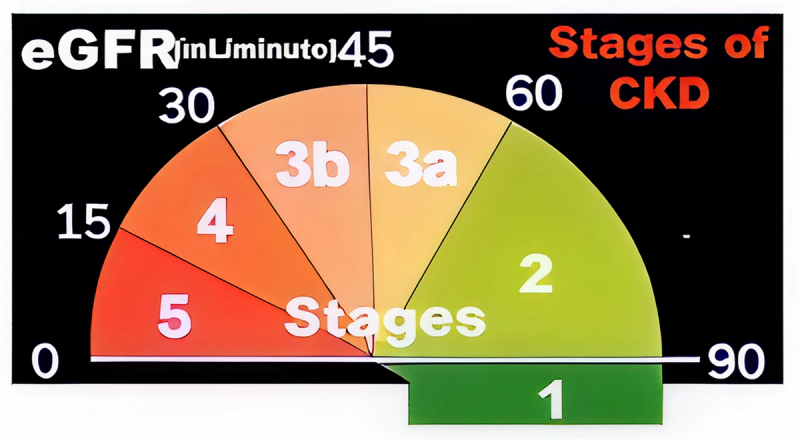
Stage 1, 2, and 3a: These stages can be reversed by having full Recommended Dietary Allowances (RDA) of Protein and Potassium from whole foods i.e., 0.83 to 1 gm/kg of body weight of PDCAAS adjusted protein and 3600 mg of Potassium. (Gross protein in 100 gms of Atta is 10.57 gms while PDCAAS adjusted protein is only 4.4 gms.) Having full RDA in these stages preserves the muscle, which is essential because protein quantity needs to be restricted in the unfortunate event of CKD progressing to the latter stages.
Stage 3b and 4: Keep the PRAL (potential renal acid load) low by eating a balanced diet and restricting protein to 0.6 to 0.8 gms/kg.
Potential renal acid load (PRAL) of some foods (for 100 g of edible portion).
| Foods | PRAL (mEq/100 g) |
|---|---|
| Fruits and fruit juices | −3 |
| Banana | −8.2 |
| Vegetables | −2.8 |
| Carrots | −6.4 |
| Fruits and oils | 0 |
| Milk and whey-based products | +1.0 |
| Brown Rice | +2.2 |
| Bread | +3.5 |
| Noodles,spaghetti | +6.7 |
| Fish | +7.9 |
| Cheese (protein<15g/100g) | +8.0 |
| Meat and meat products | +9.5 |
Stage 5 and unsuccessful efforts in reversing earlier Stages: Consult the nephrologist in the unfortunate event of CKD progressing to Stage 5 or if the efforts to reverse earlier stages, through lifestyle, changes are unsuccessful.
Role of the Patient and the need of Nephrologist in reversing CKD:
CKD, like any other lifestyle disease (LSD), is the result of ignoring signals of abuse shown by the body until they reach a clinical level, which may take several years or even decades. For example, people do not consider that they have a problem until the urine albumin–creatinine ratio is more than 3 or eGFR is substantially less than 90 mL/minute.
The body is endowed with excess capacities, so clinical symptoms show up only after substantial organ damage, which means treatment can only prevent further damage. The better way is to understand that symptoms are dynamic; i.e., reduction of eGFR from 120 to 90 mL/minute, which is still not a clinical symptom, is as crucial to organ health as eGFR falling below 60 mL/minute, which is a clinical symptom for Stage 3 CKD. So, consult a nephrologist if the progression of CKD is not reversed with lifestyle changes.
Only the patient can monitor lab results over the years, because doctors seeing a single report of eGFR of 90 mL/minute may not consider it a problem, as it is still not a clinical symptom.
Our Support:
We provide nutrition support that is supportive of your current renal health. We give you a diet plan designed to provide appropriate potassium and phosphorus for the stage of CKD
We calculate the PRAL of your current diet and recommend a PRAL that supports your clinical condition
We provide:
Real-time support that helps make quick modifications to make the program effective
Dishes that suit your palate to make it sustainable
We monitor your blood reports to ensure the lifestyle changes you have made are adequate and supportive of your inner health and recommend suitable modifications to support the results as required
Recommendations for appropriate physical activity and monitoring as part of the program
NOTE:
- For CKD Stage 3, 4, and 5 conditions, medical supervision is a must. We go by the client’s health care provider’s guidelines.
- For CKD Stage 3, 4, and 5 conditions, our diet plans must be approved by the client’s health care provider.